Scattered around Shetland, mostly near places of residence, are these small walled round enclosures (sometimes they can be square) called planticrubs.
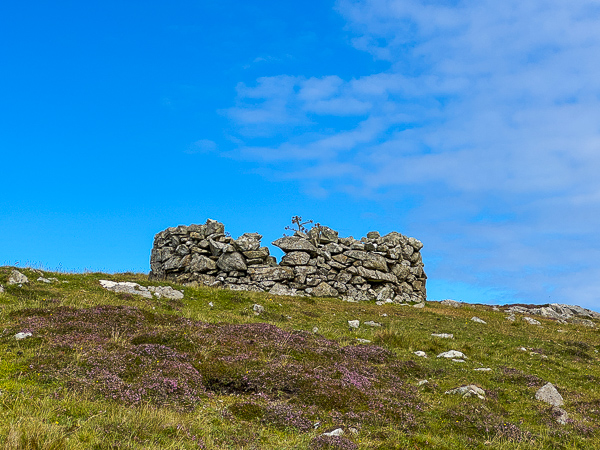
I have four directly behind my house and Clothie (my separate five acre croft) in the open hill (scattald). These planticrubs are all fairly close to each other but the walls are broken in places. They don’t have any door-ways so I guess folk would scramble over the walls to get in.
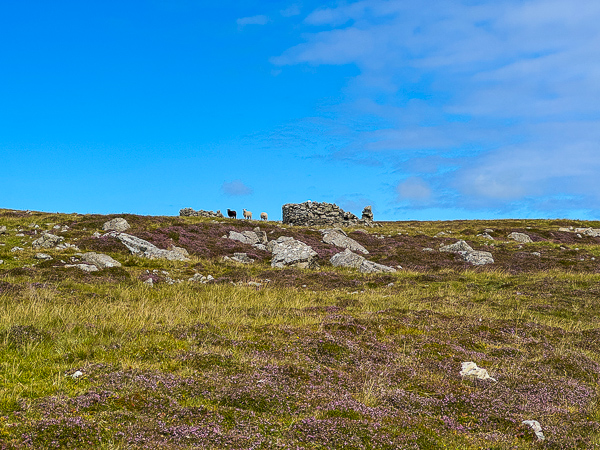
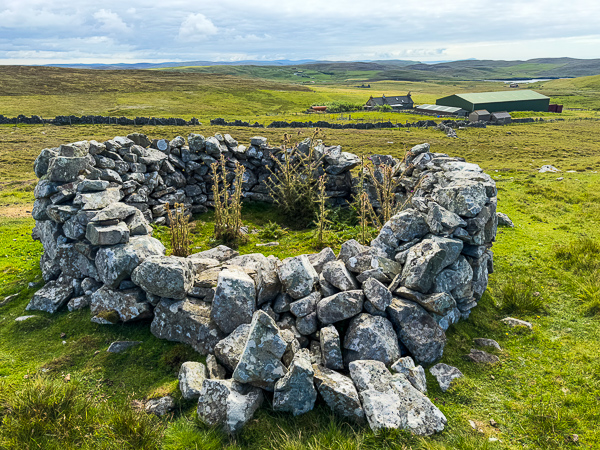
They are very old and originally built for growing young kale and cabbage plants, protecting them from the harsh Shetland wind before planting them out. That makes sense. You can see the higher level of earth inside so it would make an excellent planting place – beautifully sheltered.
Apparently, and I did not know this, Shetland kale/cabbage is the oldest known Scottish local vegetable variety. It has been grown on Shetland since at least the 17th Century.
(I am not a fan in any form).
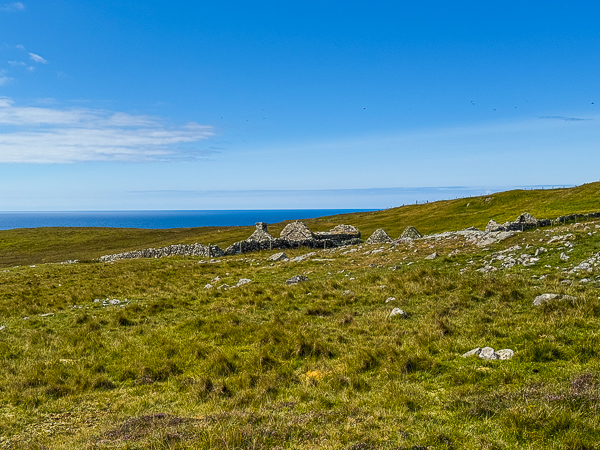
These days, the sheep use them for shelter in winter jumping over the now rumbled dry-stone walls while the immense bunny population make their homes in the soft peaty earth inside. The dogs love investigating them. I often wonder how old these planticrubs are and to which croft they belonged. I find local history fascinating.
Share this:

Discover more from My Shetland
Subscribe to get the latest posts sent to your email.
You are so lucky to have really beautiful examples of your history all around you on Shetland. Here in America, our “history” is the day before yesterday. Just not that exciting. On the eastern part of the country we have some history, but her in the west (I’m in Northern California) it’s just not that exciting.
I’ve never heard of them before; fascinating. I wonder how they got in and out to sow and collect the cabbages.
Amazing blue color sky today. I always enjoy the local history lessons you share. Perhaps this could be a design your OH could build for a different, future rock garden.
Thank you so much, Frances, for sharing that. That’s fascinating. I wonder if the Torriefield group would know anything else about how old they are. The amount of work that went into fitted stonework is amazing. Okay, so they provided for growing above ground vegetables, but I wonder where root vegetables were grown. What a brilliant idea to insure a protected environment. History is so fascinating. These structures were really the precursors to the polytunnels of today.
The reason for planticrubs having no gate is to keep stock out. If there isn’t a gate it can’t be left open or get broken.
Also wood is at a premium in Shetland.
Thank you
How amazing to be living in such history. Very interesting.