I haven’t been to the Shetland Museum at Hay’s Dock, Lerwick for ages but they had recently been loaned a beautiful painting as part of The National Gallery Masterpiece Tour.
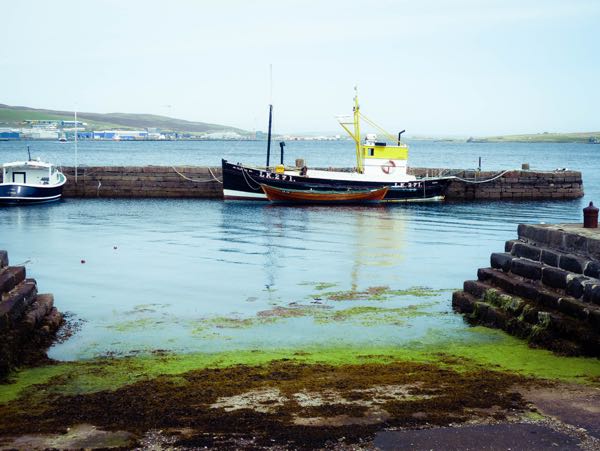
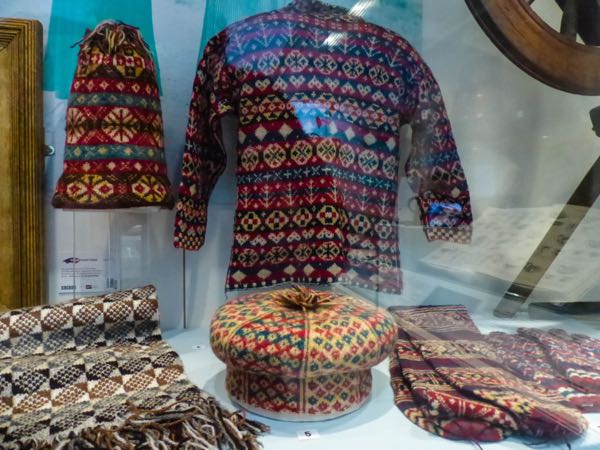
We started our visit upstairs where the Shetland knitwear and textiles were exhibited.

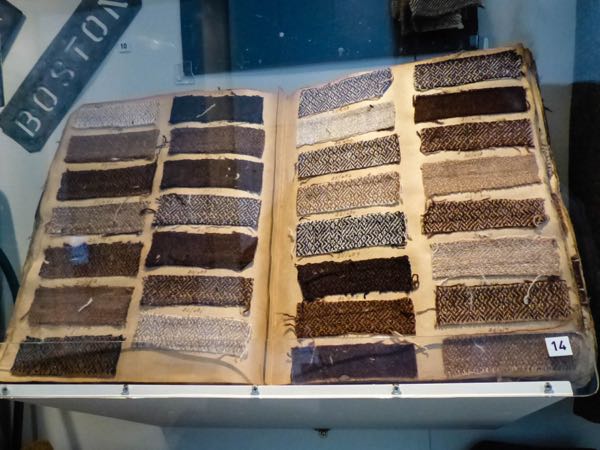

I love the old-style Fair Isle all-over pattern. Stunning.

I think I need to go back on my own for a day and just take it all in properly.
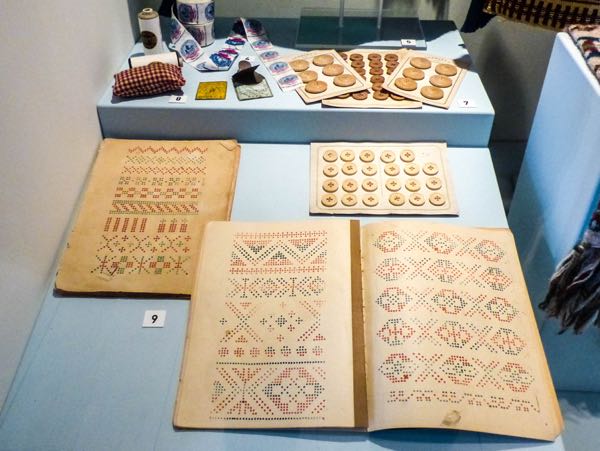
There is so much to learn.
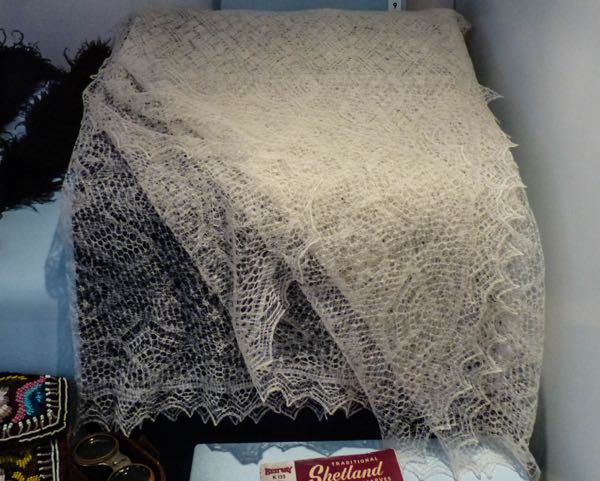
I want this hat (both).
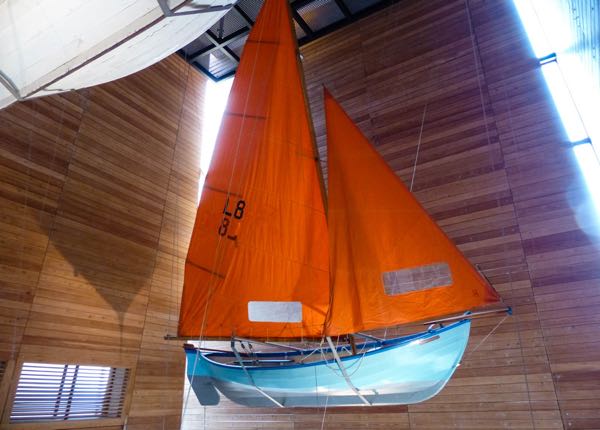
Going downstairs we were greeted with this incredible view.
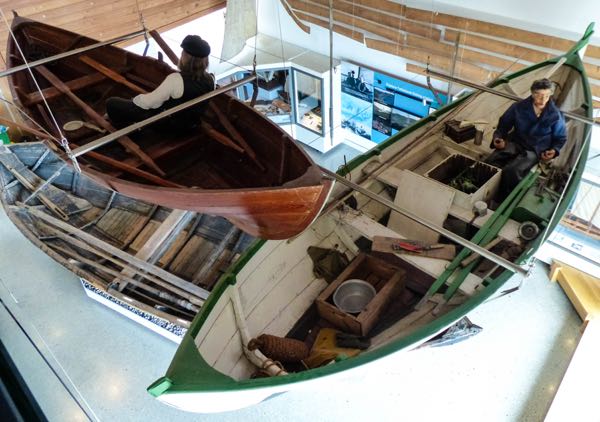
Hanging like they were floating in the air, were the historical stunning Shetland wooden boats.

I need to go with my better camera.
Downstairs was more agricultural, history and geography.
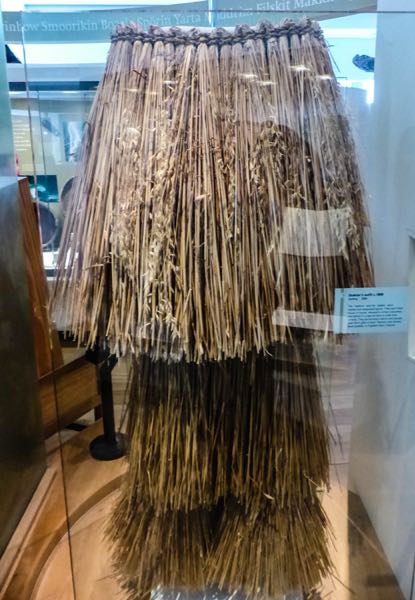
There was an original Skekler’s outfit – “Skekling is an old Shetland folk tradition. A Skekler is the name for a type of disguised person dressed in a distinctive straw costume; it is a variant of the term ‘guiser’. Skeklers would go round the houses at Halloween, New Year, and turn up at weddings in small groups performing fiddle music in return for food and drink.” Museum of Witchcraft & Magic
(Personally, I think I would shit myself if someone turned up on my doorstep wearing that!)

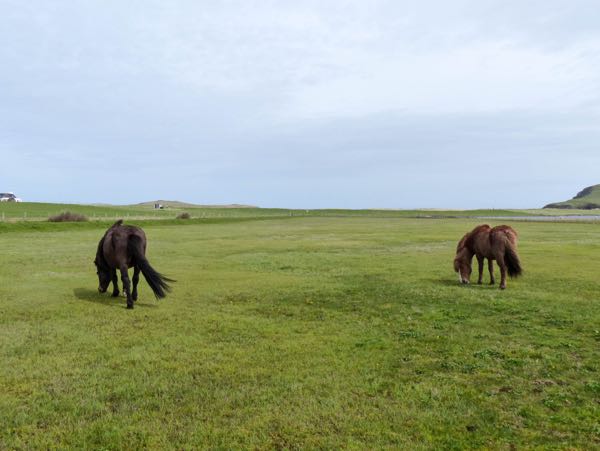
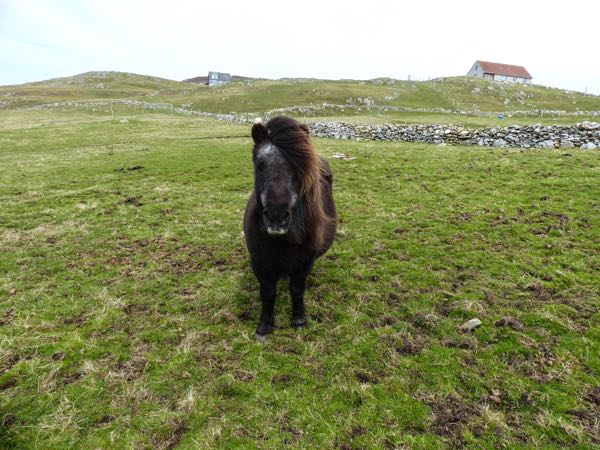
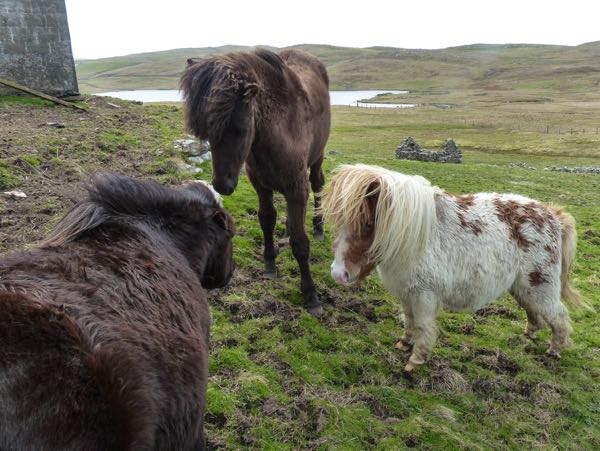
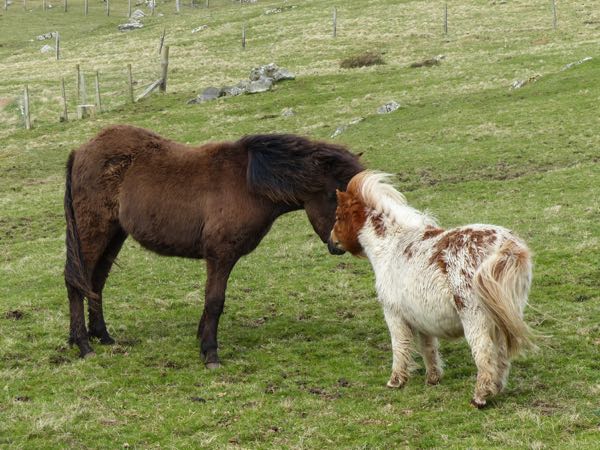
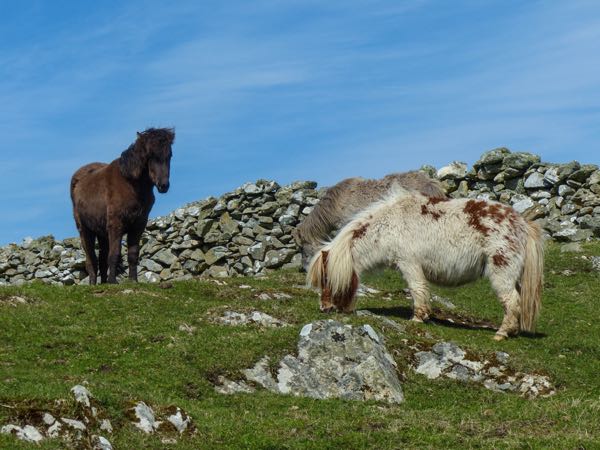
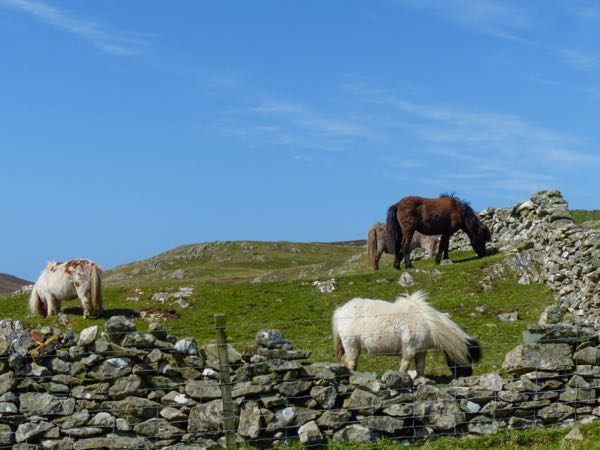
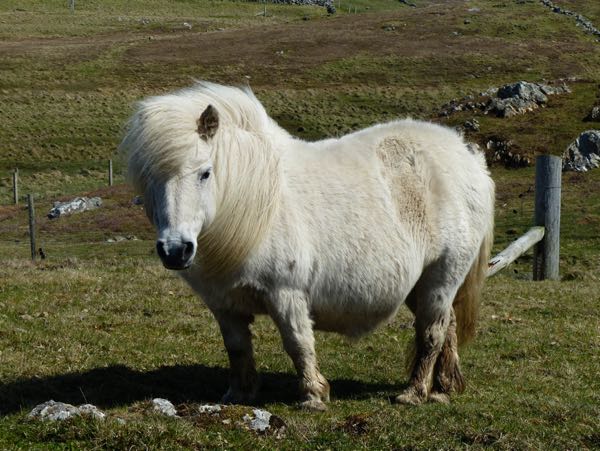
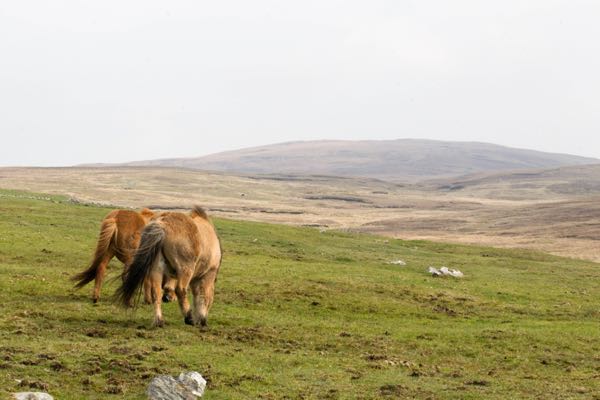
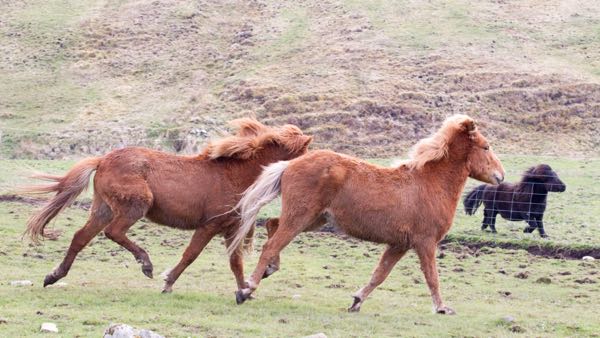
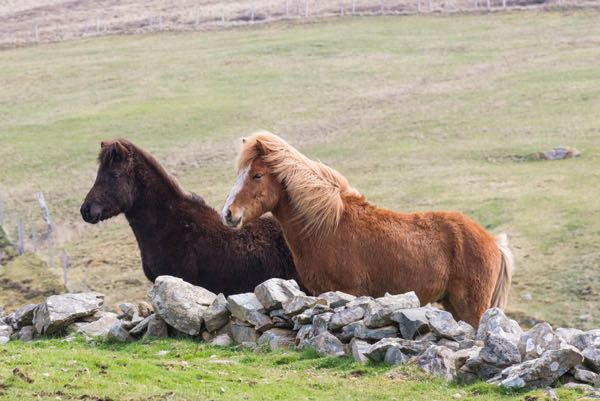
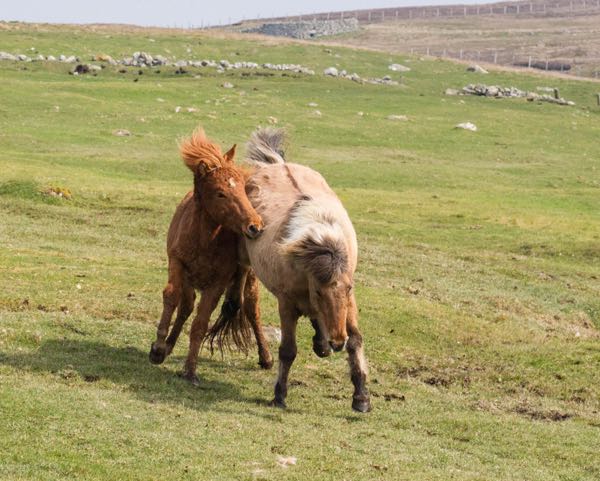
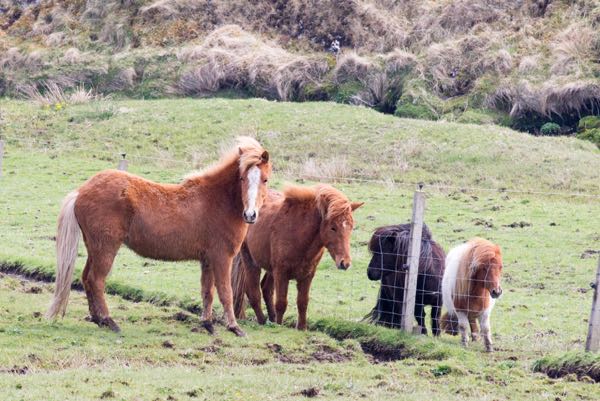
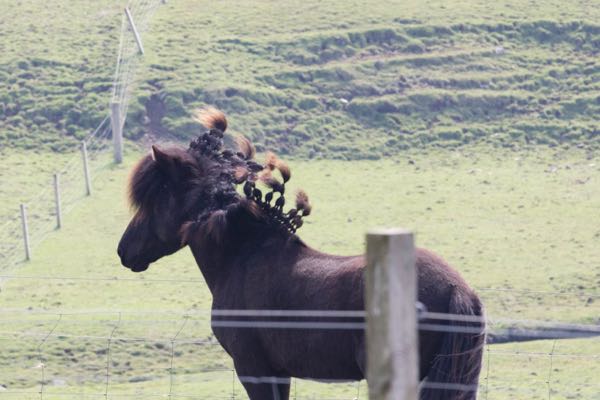
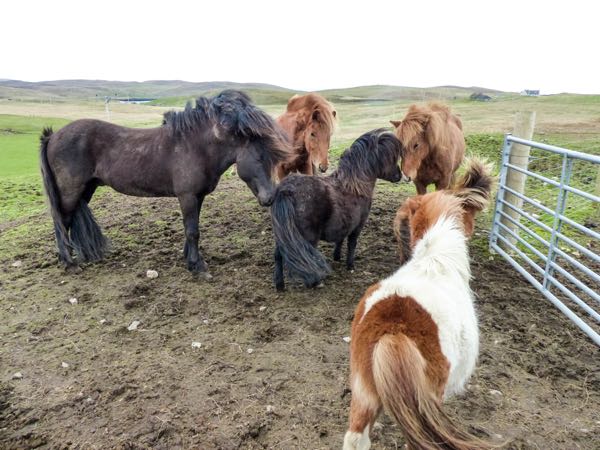
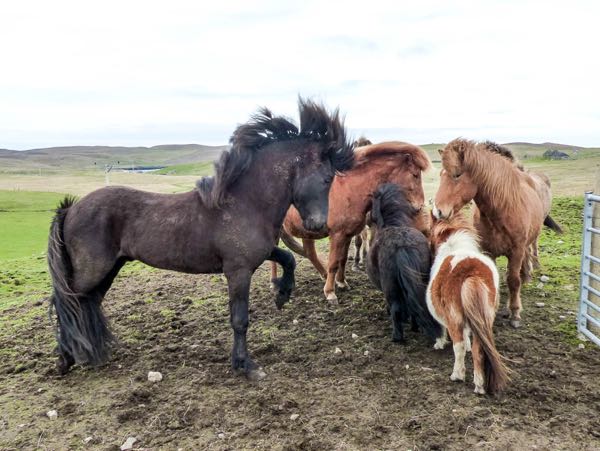
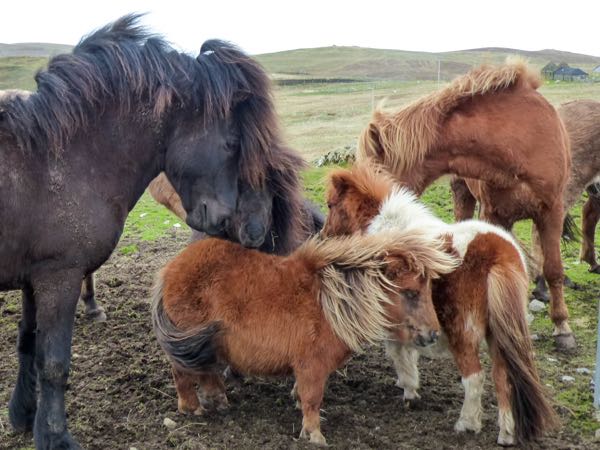
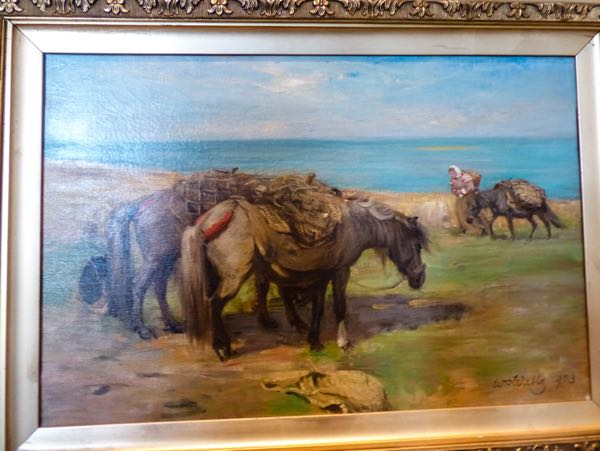
Shetland ponies didn’t feature as much as I wanted them too, though. I feel they are just as an important part of Shetland’s history as the knitwear and weaving – though I may be very slightly biased.
This is a pack saddle, “klibber” with the woven net “meshie”.
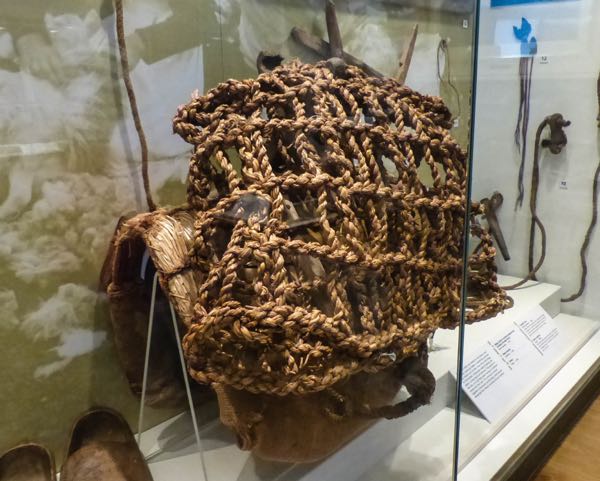
The ponies wore them like this (Icelandic look about them).
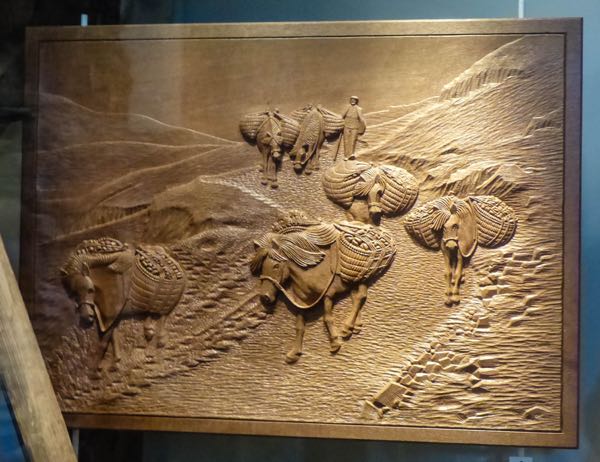
This carving depicts Shetland ponies walking “The Nill Road”. They have woven baskets, “kishies” full of peat, on their klibbers.
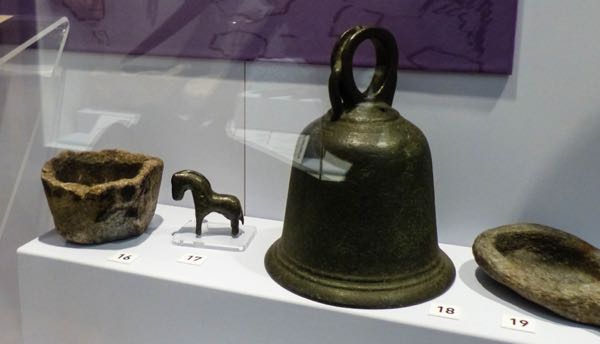
The St Ninian’s Isle Treasure was on display. Found in 1958 by a local schoolboy under a cross-marked slab in the floor of the early St. Ninian’s church, it is dated c.750-825 AD. These are replicas. The originals are kept in Edinburgh at the National Museum of Scotland (harrumph).
Can we have the originals back, please?

Stone Age implements – the knife blades in the box below were found in Stourbrough Hill (the large hill behind my croft).

An oval house, similar to the one that would’ve existed in Leradale.

From henceforth, I will be looking out for stones shaped like this.


And at last we found the picture – A Lady with a Squirrel and a Starling, (Anne Lovell?), about 1526-8, oil on oak by Hans Holbein the Younger.
Amazing and thank you to the gentleman who put me right about “The Flanders Mare” story. I was floundering in inaccuracy!

I need to go back.